martedì 30 agosto 2016

ANCORA SULLA MELANZANA ROSSA

Dopo la pausa ferie, ricomincio dalla Melanzana Rossa di Rotonda, quella che ho piantato nello spazio condominiale. Guardate come l'ho trovata al mio ritorno.
(1)

La pianta è sana e ci sono solo tracce limitate di ragnetto rosso, autentica piaga della melanzana rossa sul balcone. È stracarica di frutti.
(2)
(3)

Ho raccolto quattro melanzane: la più grossa pesava 116 grammi; la più piccola 87 grammi. Ho buone speranze di raccoglierne ancora più grosse. Finora sul balcone la melanzana più grande ha raggiunto i 76 grammi.
(4)


ABOUT THE ROTONDA RED EGGPLANT 

On my return from the holidays, I start again from the Rotonda Red Eggplant, the one I've bedded out in the condominial greenery (pic 1).

The plant is healthy and there are only a few traces of Spider Mites, a thorough bane to the red eggplant on the balcony. It's overloaded with fruits (pics 2 and 3).

I harvested four aubergines: the biggest weighed 116 grams, the smallest 87 grams (pics 4). I have high hopes of picking others still bigger. So far on the balcony the record weight has been 76 grams.

giovedì 4 agosto 2016

E LE MELANZANE ROSSE?

Quest'anno la Melanzana Rossa di Rotonda ha fatto una cattiva riuscita sul balcone. Il ragnetto rosso ha devastato le foglie in modo incredibile come negli anni precedenti, ma almeno in passato la produzione di melanzane è sempre stata ottima. Quest'anno no. I frutti stanno facendo una fatica pazzesca ad allegare. I fiori si seccano e cadono.
Fortuna ha voluto che ne piantassi una anche nello spazio condominiale e qui le cose stanno andando decisamente meglio. A dire il vero, ero convinto di aver piantato una nuova varietà di melanzana rossa, quella di Mormanno, ma in realtà si è rilevata essere anch'essa una Rossa di Rotonda. Non c'è traccia di ragnetto rosso, ma solo qualche buco su alcune foglie per i frequenti acquazzoni nel mese di luglio. 
(1) Melanzana Rossa di Rotonda

Finora l'unica pianta ha prodotto due frutti, ma solo perché l'ho messa a dimora in ritardo. Molte altre piccole melanzane rosse stanno allegando. Di ritorno dalle ferie mi aspetto grandi cose.
(2)

Anche le piantine che avevo messo a dimora nell'orto abusivo, che sto trascurando per assoluta mancanza di tempo, se la stanno cavando tutto sommato bene.
(3)
(4)

I due frutti della melanzana condominiale più uno dell'orto abusivo, rispettivamente di 63, 49 e 29 grammi. Con queste tre melanzane sono riuscito a fare un vasetto di una deliziosa crema di melanzane rosse. Argomento che merita un post tutto suo.
(5)

Comunque tra qualche settimana posterò ancora sulle melanzane rosse in maniera più approfondita.


WHAT HAS BECOME OF MY RED AUBERGINES?

So far the Rotonda Red Eggplant has been a failure on the balcony. The red spider has ruined all leaves in a devastating way as in the previous years, but at least in the past the aubergine production has always been excellent. Not this year. Fruits have hardly been setting with flowers wilting and falling.

Luckily I planted one in the condominial greenery as well (pic 1). Here things are going undoubtedly better. Actually, I believed I had bedded a new red aubergine strain, that from Mormanno, but in fact it also turned out to be a Rotonda Red Eggplant. There's no trace of red spiders, but only few holes on some leaves because of the frequent July heavy downpours.

So far the single plant has produced two fruits (pic 2), but only because I bedded it out late. Lots of other red aubergines have been setting. I'm expecting great things when I go back home from holidays.

The red aubergines I planted out in the unauthorized garden are doing very nicely as well, even though I'm neglected it for lack of spare time (pics 3 and 4).

On pic 5 are the two condominial aubergines with one from the unauthorized garden. They were 63, 49 and 29 grams respectively. I made a jar of delicious aubergine spread with them. This topic deserves a post of its own.

Anyway, in a few weeks I'll post more exhaustively about the red aubergines again.

venerdì 29 luglio 2016

L'ULTIMO BARATTIERE?

Ieri pomeriggio ho raccolto il sesto e ultimo Barattiere. Almeno credo. La pianta sembra ancora vitale, anche se di nuovi frutti non c'è traccia. I caroselli spesso vanno in riposo vegetativo per poi produrre ancora. Se non dovesse succedere in questo caso, poco male: il Barattiere è il meno prolifico tra tutti i caroselli (anche se sarebbe meglio parlare di melone) e sei frutti sono un grande risultato.
(1)

Ho preferito raccoglierlo un po' più grosso dei precedenti cinque. Pesava 618 grammi ed è stato il migliore per gusto e morbidezza della polpa.
(2)
(3)


THE LAST BARATTIERE?

Yesterday afternoon I picked the sixth and last Barattiere. Well, actually, I'm not sure about that. The vine seems to be still vital, even though there's no trace of new fruits. Carosellos have often a vegetative break, but later on they start to produce again. If it shouldn't happen in this case, nothing bad: the Barattiere is the least productive of all carosellos (even if it would be better call it a melon) and six fruits is an amazing achievement.

I preferred to harvest it a little bigger than the previous five. It weighed 618 grams and it was the best for taste and pulp smoothness.

giovedì 28 luglio 2016

TORTARELLO BARESE

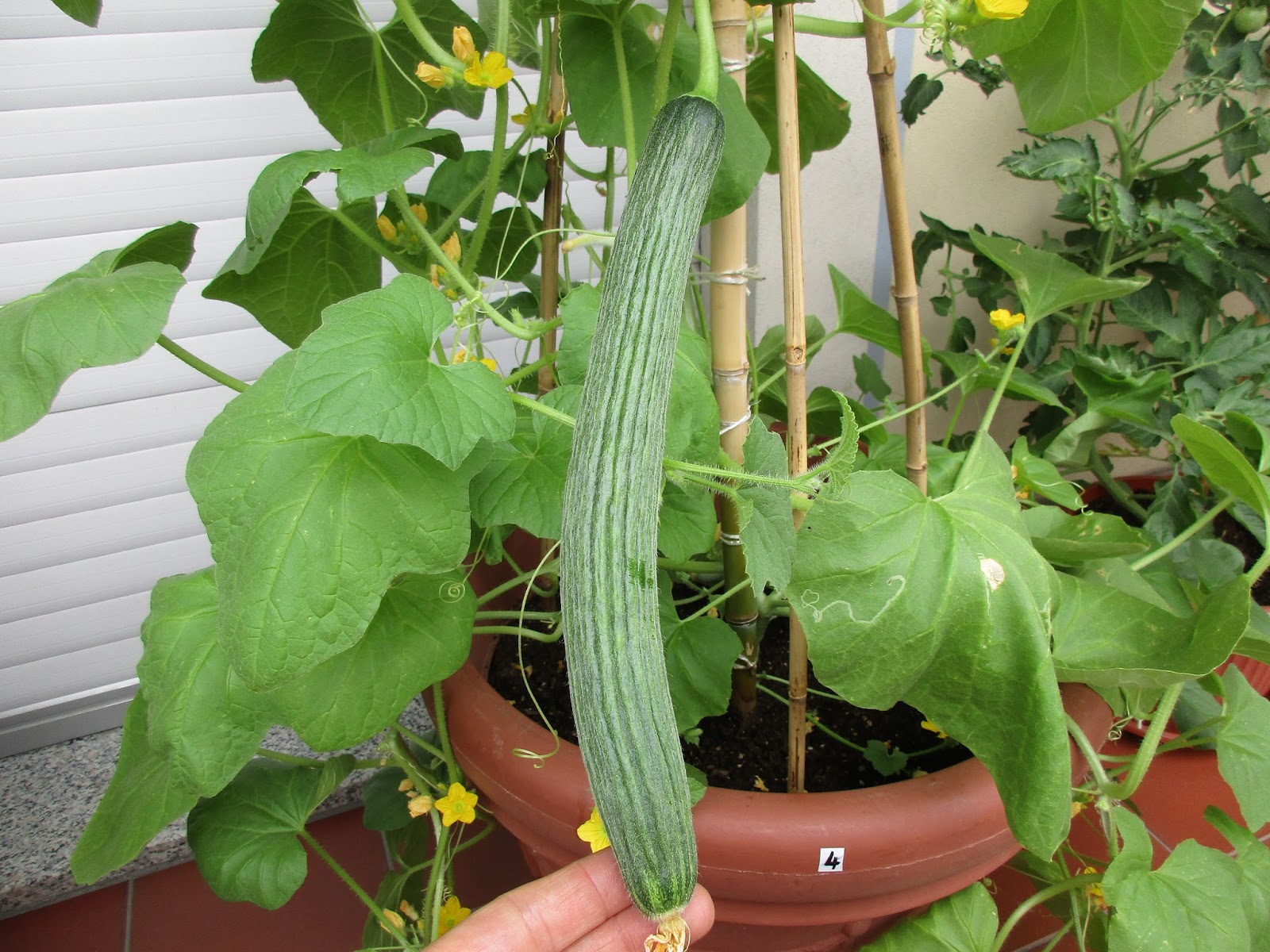
Ho già detto delle vicissitudini che mi hanno portato a coltivare, mio malgrado, il Tortarello Barese (vedi qui). Innanzitutto, diversamente dal carosello che è un Cucumis melo adzhur, il Tortarello Barese è un Cucumis flexuous, cioè è una specie di cetriolo. Direi che assomiglia molto al Cetriolo Armeno Verde Scuro (vedi qui e anche qui). Devo ammettere che non è tra i miei preferiti e non credo che lo coltiverò ancora.
Nalla prima fase di crescita il Tortarello Barese, detto anche Tortarello Verde Barese oppure Tortarello Verde Scuro Barese, presenta una buccia di colore verde chiaro con una fitta peluria.
(1)

Man mano che cresce, la buccia si scurisce e perde quasi del tutto la peluria.
(2)
(3)
(4)

Il Tortarello Barese presenta anche delle solcature longitudinali abbastanza marcate. Andrebbe raccolto quando raggiunge una lunghezza di 40-45 cm, ma suggerisco di raccoglierlo molto prima, diciamo intorno ai 30-32 cm. In questo modo, la placenta è ancora attaccata alla polpa e i semi sono piccoli e commestibili, come si può vedere nella foto 5.
(5)

Se aspettate oltre, i semi diventano troppo grossi e la placenta si stacca dalla polpa. Quindi la parte edibile si riduce sensibilmente.
(6)

Una peculiarità del Tortarello Barese è che cresce su steli lunghissimi, lontano da quello principale.
(7)

Gli ultimi due frutti si sono un po' spanciati.
(8)
(9)


Frutti raccolti: 7 (da una singola pianta)
Peso complessivo: 2,510 kg
Peso medio per frutto: 358,58 grammi


TORTARELLO BARESE

I've already reported about the vicissitude that induced me to cultivate the Tortarello Barese despite myself (see here). First of all, differently from the carosello which is a Cucumis melo adzhur, the Tortarello Barese is a Cucumis flexuous, that is a kind of cucumber. I'd say it looks like the Armenian Dark Green Cucumber a lot (see here and also here). I must admit it's not among my favourites and I think I won't grow it again.

In its first growth stage the Tortarello Barese, also called Tortarello Green Barese or Tortarello Dark Green Barese, shows a light green coloured skin with a thick fuzz (pic 1).

As it grows, the skin gets darker and darker and it loses its fuzz almost completely (pics 2 to 4).

The Tortarello Barese shows some fairly marked longitudinal furrows as well. It should be harvested when it's 40-45 cm long, but I suggest to pick it much earlier, let's say around 30-32 cm. Thus the placenta is still united to the flesh and seeds are small and edible (pic 5).

If you wait too much, seeds get too big and the placenta pulls away from the flesh (pic 6). So the eatable part decreases remarkably.

A characteristic feature of the Tortarello Barese is its growth on very long stems, far from the main one (pic 7).

The last two fruits bulged a little bit (pics 8 and 9).


Fruits harvested: 7 (from a single vine)
Total weight: 2,508 kg
Average weight per fruit: 358,29 grams

venerdì 22 luglio 2016

RACCOLTO DI POMODORINI NANI

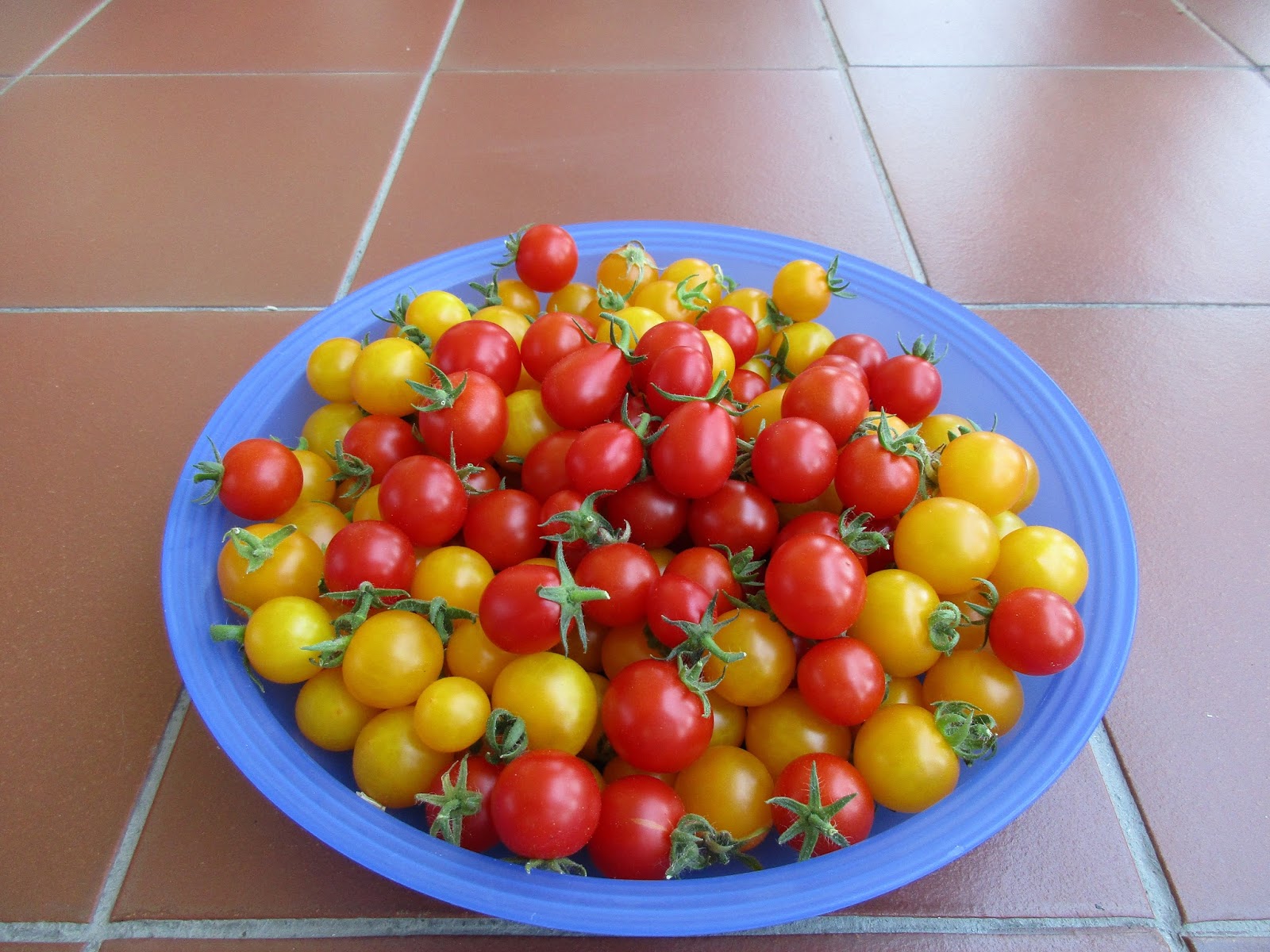
Due giorni fa ho raccolto oltre un chilo di pomodorini nani: Hahms Gelbe, Eterno Giallo, Eterno Rosso, Minibel e Datterino.
(1) Raccolto del 20 luglio 2016

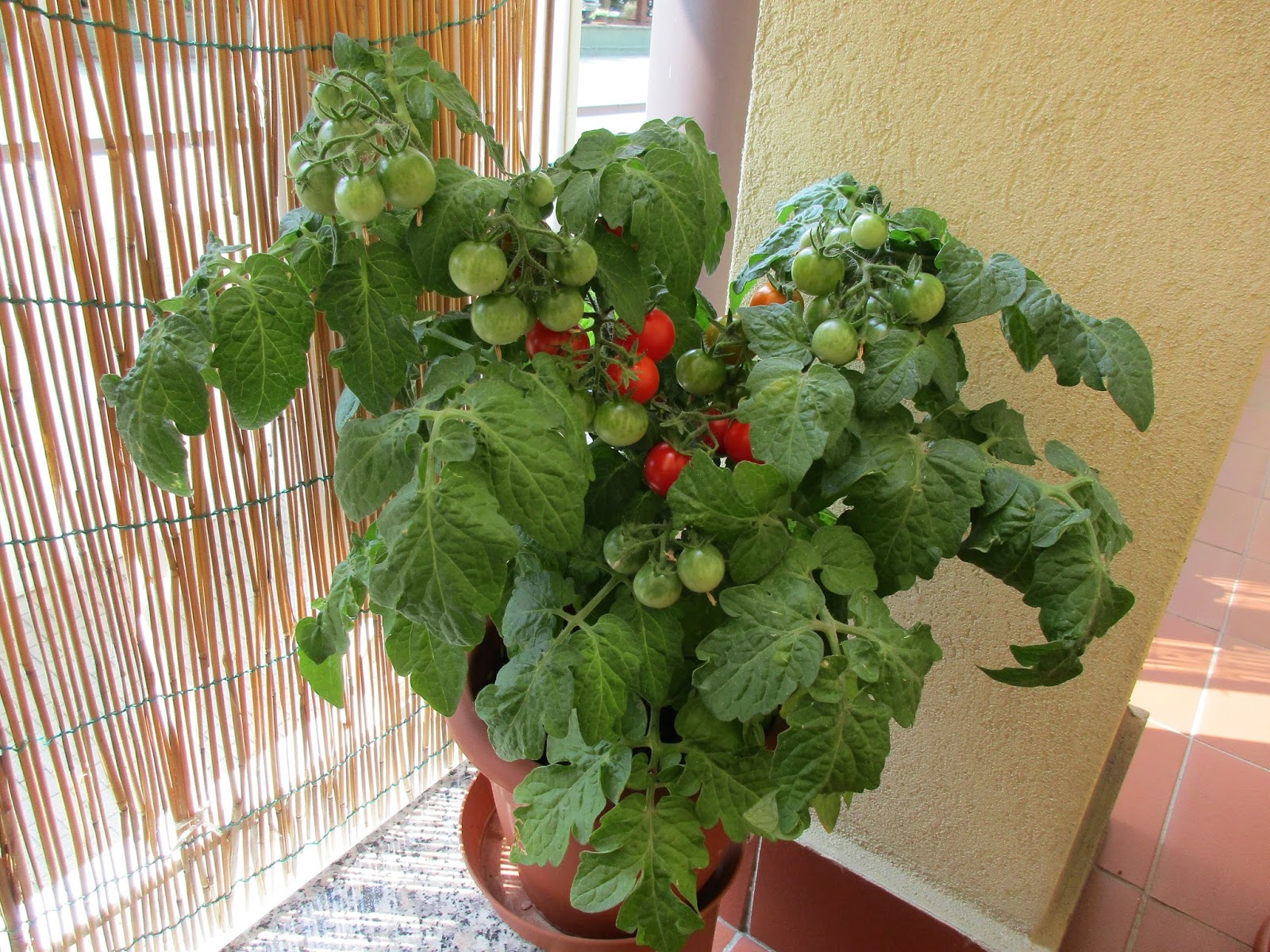
Tra le mie piantine di pomodorino a crescita nana, spicca una piantina che ho chiamato Datterino. La pianta madre è nata inaspettata alla fine della scorsa estate in un vaso dove avevo coltivato un carosello. 
(2) Pomodorino Datterino 2015
(3) Pomodorino Datterino 2015

Ho curato questa piantina fino a inverno inoltrato finché sono riuscito a fare semi freschi. E quest'anno ne sto coltivando due.
(4) Pomodorino Datterino 2016
(5) Pomodorino Datterino 2016


DWARF TOMATOES HARVEST

Two days ago I harvested over one kilo of dwarf tomatoes: Hahms Gelbe, Eterno Yellow, Eterno Red, Minibel and Datterino (pic 1).

Among my dwarf growth tomatoes, a plant I've named Datterino outshines the rest of the company. The mother plant came out unexpected at the end of  2015 summer in a pot where I'd cultivated a carosello vine (pics 3 and 4).

I overwintered this plant till I was able to save seeds. And this year I'm cultivating two Datterino plants (pics 4 and 5).

mercoledì 20 luglio 2016

ANCORA UN AGGIORNAMENTO SUI MIEI CAROSELLI

Qualche foto scattata recentemente.
Per primo un Carosello Tarantino. Lo raccolgo quando arriva a pesare intorno ai 400-500 grammi, più o meno come il Barattiere. Rispetto a questi, la consistenza è un po' meno morbida. Il frutto nella foto 1 è nato nella parte bassa della pianta, molto lontano dallo stelo principale.
(1) Carosello Tarantino

Questo esemplare, invece, è nato sulla parte superiore della pianta.
(2) Carosello Tarantino

Grande soddisfazione dal Barattiere. Di solito due-tre frutti per pianta sono la norma; finora ne ho raccolti cinque e almeno un altro sta andando a maturazione.
(3) Barattiere Tondo
(4) Barattiere Tondo

Ora il Tondo di Massafra che ama crescere vicino allo stelo principale...
(5) Carosello Tondo di Massafra

...ma come il fratello quasi gemello, il Carosello Tondo Massafrese, a volte non disdegna di svilupparsi ben lontano dallo stesso.
(6) Carosello Tondo di Massafra

A proposito di caroselli che non amano la vicinanza allo stelo principale, ecco il Tortarello Verde Barese.
(7) Tortarello Verde Barese

Questo è il raccolto di ieri..
(8) Barattiere, Tondo di Massafra e Tortarello Verde Barese

...e questo è il raccolto del 16 luglio. Ci sono anche pomodori di diverse varietà.
(9)


STILL AN UPDATE ABOUT MY CAROSELLOS

A few pictures taken recently.

First a Carosello Tarantino. I gather it when it weighs about 400-500 grams, more or less like the Barattiere. But the texture of the former is less soft than that of the latter. The fruit on pic 1 came out on the lower part of the vine, very far from the main stem.

The Carosello Tarantino on pic 2 came out on the upper part of the vine.

On pics 3 and 4 are two fruits of Barattiere. I'm finding fulfilment in this carosello variety because as a rule a vine gives two or three fruits. So far I've harvested five of them and at least another one is ripening.

On pics 5 and 6 are some carosellos Tondo Massafra which love growing near the main stem, but they don't sometimes disdain to bloom far from it, like its practically twin Carosello Tondo Massafrese.

On pic 7 is a fruit of Carosello Tortarello Barese which always grows on a long secondary stem far from the main one.

On pic 8 is the yesterday's harvest whereas on pic 9 is that of the 16th July. Together with some carosellos I picked tomatoes of different strains.

venerdì 15 luglio 2016

KANTHARI MULAKU - Un peperoncino indiano molto piccante

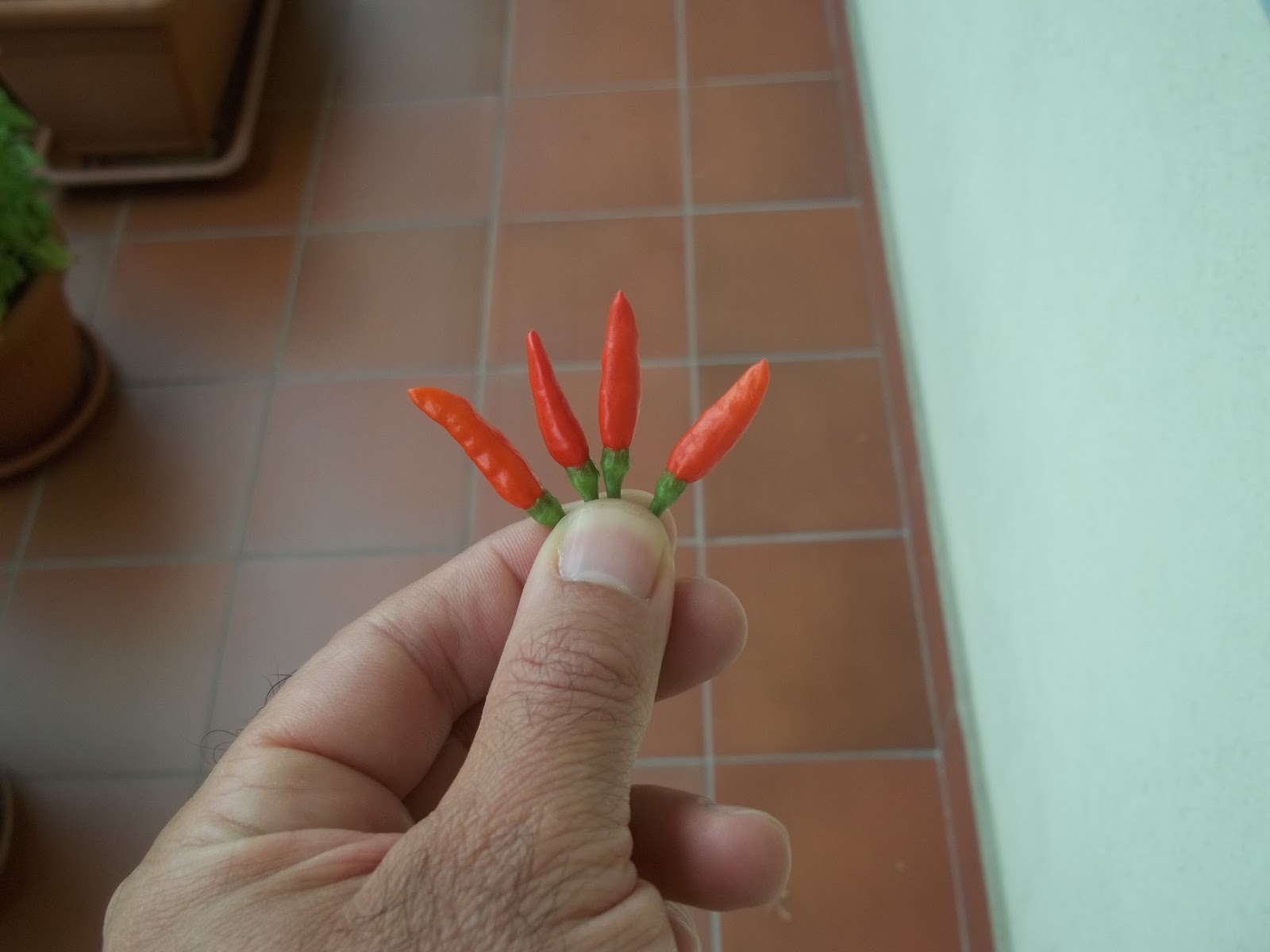
Una delle frustazioni dell'ortolano è coltivare qualcosa di cui non conosce il nome. A volte, però, con la tenacia e un un po' di fortuna, cercando qua e là su Internet, ci si imbatte nel sito giusto e si riesce a dare un nome a quel qualcosa. È quello che è successo a me con il Kanthari Mulaku. È un capsicum frutescens, molto simile al Tabasco, originario di uno stato dell'India meridionale, il Kerala.
Qualche anno fa lo coltivavo insieme a un frutescens dello Sri Lanka, salvo poi scoprire che sono la stessa varietà. Il nome che danno i cingalesi a questo peperoncino piccante era già un indizio pesante: lo chiamano Kochchi o Kochi che è anche il nome della capitale del Kerala.
Il mio ultimo Kanthari Mulaku ha raggiunto un'altezza di 55 cm mentre le bacche variavano da 2 a 5 cm.

È una pianta molto produttiva.

Uno dei tanti raccolti da una singola pianta.

Se volete mettere le bacche sott'olio, suggerisco di raccoglierle verdi perché quando sono rosse diventano molli in poco tempo. A piena maturazione, ho provato a frullarle ed è venuta fuori una salsina niente male, ma così piccante da rendere necessario un paradenti d'amianto!

E questo è il fiore del Kanthari Mulaku.


KANTHARI MULAKU - A very hot Indian chilli pepper

One of the frustations of a gardener is to grow something he ignores the name of. But with perseverence and luck, searching here and there in Internet, you can sometimes stumble on the right website and be able to give a name to that something.

It's what happened to me with Kanthari Mulaku. It's a capsicum frutescens, very similar to Tabasco, native to Kerala, a state of South India.

A few years ago I used to cultivate it together with a Sri Lanka frutescens, but later I found out they are the same strain. The name the Sinhalese people give to this chilli pepper is already a clear indication. As a matter of fact, they call it Kochchi or Kochi which is the name of Kerala capital city as well.

My last Kanthari Mulaku reached 55 cm in height whereas the pods ranged from 2 to 5 cm. It's a very productive plant. If you want to put the pods under oil, I suggest to pick them green because when red they get almost soon very mushy. Ripe I tried to blend them and got a delicious sauce, but so hot and pungent to make a fireproof gumshield necessary!

domenica 10 luglio 2016

AGGIORNAMENTO DAI MIEI BALCONI

Eccovi alcune foto scattate negli ultimi giorni.
Il Tortarello Verde Barese fa frutti lunghi fino 45 cm, ma suggerisco di raccoglierlo un po' prima, altrimenti trovate semi grossi, anche se teneri e molto commestibili. Direi che l'ideale è raccoglierlo intorno ai 35 cm.
(1)
(2)
(3)

Anche i pomodorini nani cominciano a maturare. Strano a dirsi, ma stanno crescendo meglio quelli coltivati in vasi da 18 cm che quelli in vasi da 26 cm.
(4) Pomodorino Eterno Giallo
(5) Pomodorino Eterno Rosso

Primo mini raccolto di pomodorini nani. L'Eterno Giallo e l'Eterno Rosso sono i più precoci, ma anche le altre varietà stanno andando a maturazione. Ve ne parlerò presto.
(6)


UPDATING FROM MY BALCONIES

Here you are some pictures taken the last days.

The Tortarello Green Barese produces fruits which can reach 45 cm, but I suggest to harvest it a little earlier, otherwise you find big seeds, though tender and very edible. I'd say that the best solution is to pick it when it reaches 35 cm (pics 1 to 3).

The dwarf tomatoes are starting to ripen as well. Strange to say, but those in 18 cm diameter pots are growing better than the ones in 26 cm diameter pots (pics 4 and 5).

On pic 6 the first small harvest of dwarf tomatoes. The Eternal Yellow and the Eternal Red are the most forward, but the other strains are ripening as well. I'll talk about them soon.

giovedì 7 luglio 2016

GLI ERRORI DELLE DITTE SEMENTIERE

Guardate il carosello ritratto sulla bustina di semi.
(1)

Ora guardate questa specie di cetriolo.
(2)

Vi sembrano gli stessi? A me no. Eppure il cetriolo della foto 2, un Tortarello Verde Barese, è venuto fuori dai semi della suddetta bustina. Non faccio commenti...


SEED COMPANIES' MISTAKES

Have a look at the carosello spotlighted on the seed packet on pic 1 and then at the kind of cucumber on pic 2. Are they the same fruit? No, they aren' t. But the cucumber on pic 2, a  Tortarello Green Barese, came out from the seeds of the above packet.

I don't make any comment...

lunedì 4 luglio 2016

CAROSELLI: PRIMO RACCOLTO

Ecco il primo raccolto di caroselli di una certa rilevanza. Da sinistra a destra in senso antiorario: cetriolo, due Barattieri Tondi, Polisello, Tondo di Massafra, Tarantino.


Il cetriolo avrebbe dovuto essere un Mezzo Lungo di Polignano da raccogliere quando avrebbe raggiunto 12 cm.  Almeno così diceva la bustina di semi comprata a Taranto l'anno scorso. Invece si è rivelato un cetriolo comune che ho raccolto grossissimo, almeno 25 cm di lunghezza e 350 grammi di peso. Buono, però, con semi piccoli nonostante la grandezza esagerata.


CAROSELLOS: FIRST HARVEST

Here you are the first carosello harvest of some account. From left to right anticlockwise: cucumber, two Round Barattieri, Polisello, Round Massafra, Tarantino.

The cucumber would have had to be a Half Long Polignano to be picked when it would reach 12 cm. Actually, this is what the packet bought in Taranto last year read. On the contrary, it turned out to be an ordinary cucumber I gathered very big, at least 25 cm long and weighing 350 grams. Tasty and sweet, anyway, with small seeds despite the exaggerated size.