domenica 14 gennaio 2018

CAROSELLO PUGLIESE - Galleria di immagini (1)

È ancora troppo presto per seminare i caroselli, soprattutto nel Nord Italia. Nell'attesa ho pensato di pubblicare alcune fra le foto migliori di tutte le varietà di carosello coltivate negli ultimi due anni. Alcune di queste foto non sono proprio perfette e molte non sono inedite in questo blog.
Le varietà che ho coltivato finora sono le più commerciali, di quelle che si trovano in tutti i vivai della Puglia. Devo attivarmi per riuscire a trovare alcune di quelle varietà rare presenti solo in pochi appezzamenti di contadini pugliesi.
(1) Barattiere

Il mio preferito è il Barattiere, il cui peso varia da 400 grammi ad un chilo. Personalmente ne ho mangiati di saporiti anche ben oltre il chilo. Non è propriamente un carosello, ma può essere considerato un vero e proprio melone. Il Barattiere è indicato con una sfilza di sinonimi: Cianciuffo, Carosello di Fasano, Carosello Tondo Liscio di Fasano, tanto per citarne qualcuno.
(2) Barattiere

Esiste anche una versione ovale del Barattiere. Peccato non averne più i semi.
(3) Barattiere ovale

Simile al Barattiere nella forma e nel gusto è il Carosello Melone Tarantino, scoperto nella parte occidentale della provincia di Taranto, più precisamente a San Basilio, una località vicino a Castellaneta. È l'unica varietà non commerciale che ho coltivato finora.
(4) Carosello Melone Tarantino

Rispetto al Barattiere, ha delle macchie verde-scuro in rilievo sulla sua buccia verde, più visibili nella foto successiva. La buccia è coriacea, più vicina al melone che non a un carosello. Direi che si può raccogliere intorno al mezzo chilo di peso. Probabilmente, come nel caso del Barattiere, è gustoso anche se raccolto più grosso.
(5) Carosello Melone Tarantino: parente stretto del Barattiere?

Tra i miei preferiti, c'è sicuramente il Carosello di Manduria. Se una caratteristica del carosello in generale è un certo polimorfismo, quello di Manduria è sicuramente il carosello che presenta i frutti dalle forme più diverse e talvolta bizzarre, anche sulla stessa pianta. L'unico elemento uniforme è il colore verde chiaro.
(6) Carosello di Manduria: stessa pianta, uno tondeggiante e uno allungato 
(7) Carosello di Manduria a forma di pera e costolature marcate
(8) Carosello di Manduria ovale con costolature poco evidenti
(9) Carosello di Manduria dalla forma bizzarra e costolature marcatissime
(10) Carosello di Manduria dalla forma tonda e costolature poco visibili


APULIAN CAROSELLO - Gallery of pictures (1)

It's still too early to sow carosellos, mainly for those gardeners living in Northern Italy. While waiting, I've thought to publish some among the best pictures of all varieties I've cultivated in the last two years. Some pictures aren't perfect and most of them have already been published in this blog.

The varieties I've grown so far are the most common ones. I have to try and get some among those uncommon varieties cultivated in few plots of land of Apulian farmers.

My favourite is Barattiere (1 and 2). Its weight goes from 400 to 1,000 grams, but I've often eaten some much bigger. Its taste was unchanged. It isn't properly a carosello: it's considered a real melon. It's got a succession of synonyms: Cianciuffo, Carosello Fasano, Carosello Fasano Round Smooth, just to name a few.

There exists an oval Barattiere as well. It's a pity indeed I haven't got seeds of this strain anymore (3).

The Carosello Melone Taranto (4 and 5) is very similar to Barattiere in taste and shape. It's the only rare variety I've grown so far. Compared with Barattiere, it's got raised darker green splotches on its green skin. Its skin is tougher than that of other carosellos; as coriaceous as a melon skin. I would say it can be harvested when fruits reach around 500 grams. As in the case of Barattiere, I suppose it's tasty even if picked bigger.

The Carosello Manduria (6 to 10) is definitely one of my favourites as well. If polymorphism is one feature of carosellos, that of Manduria is the kind of carosello with most different and sometimes bizarre shapes, even on the same vine. The only unvarying element is its light green colour. Some Carosello Manduria fruits have deep furrows, others have very marked ones and others still less visible furrows or invisible at all. 

mercoledì 10 gennaio 2018

SOLANUM AETHIOPICUM (KUMBA GROUP)

La scorsa estate ho voluto provare una varietà africana di melanzana rossa, grazie ai semi di un amico ortolano, Dino. Non sono sicuro al 100%, ma dovrebbe trattarsi di una Solanum Aethiopicum (Kumba Group).
Presenta delle costolature profonde e il frutto è piuttosto piccolo.
(1) Immature: un bel verde scuro
(2) Cominciano a maturare
(3) Arancione: maturità raggiunta
(4) Fase avanzata di maturazione


Questa varietà non mi ha entusiasmato: molto amara e piena di semi.
(5)
(6)

Anche le melanzane rosse italiane che ho coltivato finora sono amarognole, ma nel caso di questa varietà l'amaro risulta essere sgradevole. Per farla breve, non vale la pena coltivarla, come il mio amico Dino ha ammesso. Probabilmente potrei cambiare opinione se sapessi come cucinarla. Ho provato a tagliarla a fettine e farla alla griglia. Insomma...
(7)

La pianta non è molto vigorosa date le dimensioni ridotte dei suoi frutti...
(8)

...e presenta delle foglie spinose.
(9)

In compenso è molto prolifica.
(10)
(11)
(12)

Se tutte le melanzane rosse africane sono tutte come questa varietà, la mia esperienza con loro finisce qui. D'ora in poi le uniche melanzane rosse che coltiverò saranno quelle di cui ho ampiamente scritto  finora, la Melanzana Rossa di Rotonda e la Melanzana Rossa di Mormanno.


SOLANUM AETHIOPICUM (KUMBA GROUP)

Last summer I wanted to try an African red eggplant variety; I got the seeds from a gardener friend, Dino. I'm not one hundred per cent certain, but it should be a Solanum Aethiopicum (Kumba Group). It shows deep furrows and is somewhat small.

This variety didn't enthrall me because it's very bitter and full with seeds (pics 5 and 6). The Italian red eggplants I've cultivated so far are bitterish as well, but in the case of this strain the bitter taste turns out to be unpleasant. In a word, it isn't worth growing it, as my friend Dino recognized. Probably I could change my mind if I knew how to cook it. I tried to slice it and grill it. Well, not a unforgettable dish... (pic 7).

On pics 1 to 4 are diffrent stages of ripeness.

Given the small size of its fruits, the plant isn't very vigorous (pic 8), but it yields bountifully (pics 10 to 12).  Its leaves are thorny (pic 9).

If all African red eggplants are like this variety, this is the end of my experience with them.  From now on, the only red eggplants I'll grow will be the ones I've talked you about so far, the Rotonda Red Eggplant and the Mormanno Red Eggplant.

giovedì 4 gennaio 2018

PROMESSA DA MARINAIO

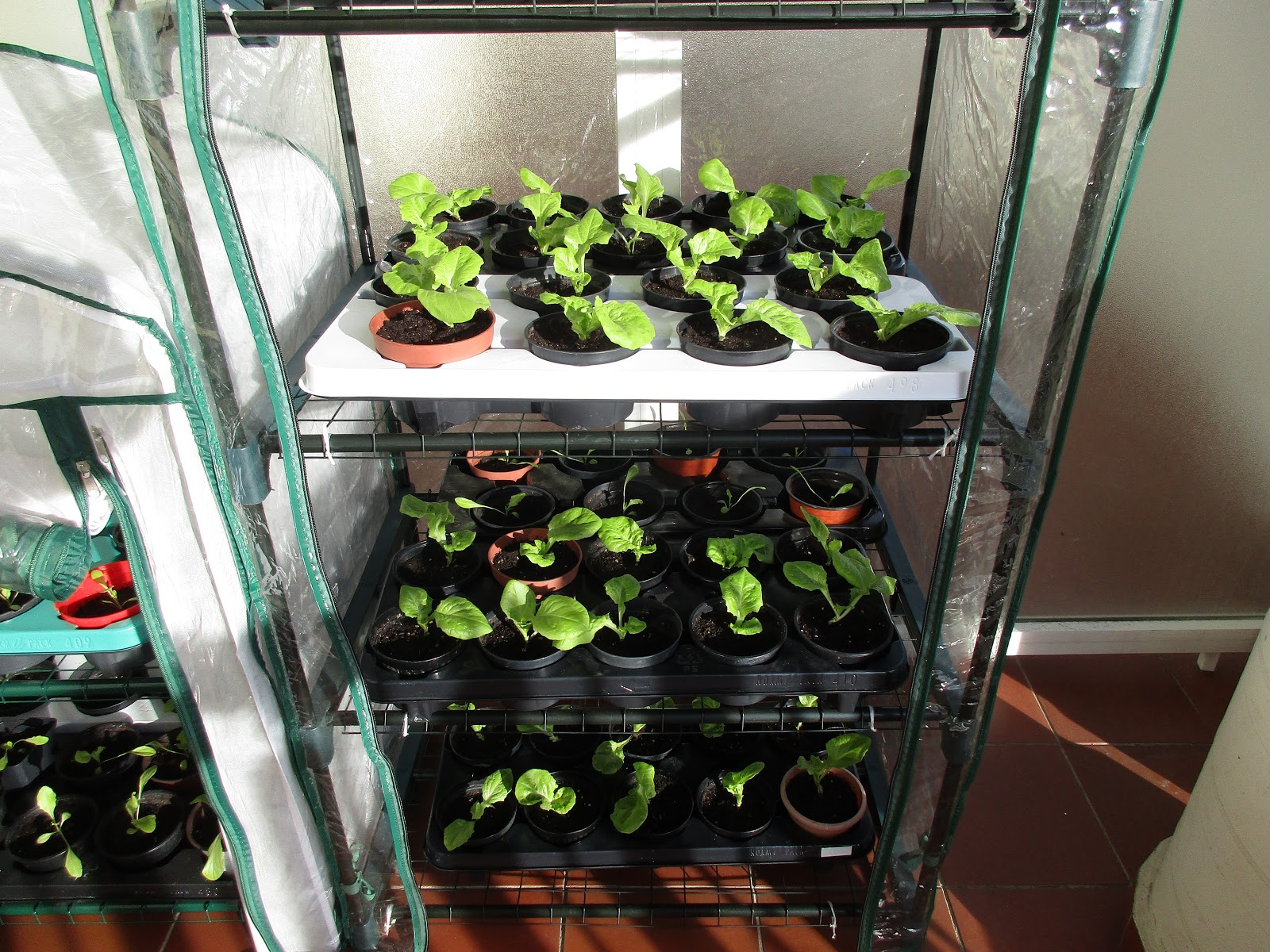
Ci sono cascato di nuovo: tutti gli anni mi riprometto di coltivare sui miei balconi anche nel periodo autunnale-invernale. Immancabilmente, vengo meno a questa promessa. Quest'anno mi sono limitato ad un centinaio di piantine di insalata...
(1) Insalatina
(2) Insalatina
(3) Una delle piantine di insalata

...e ad una sola pianta di cima di rapa quarantina per fare semi per il prossimo autunno. Sta crescendo molto lentamente, ma io non ho nessuna fretta.
(4) Cima di rapa

Il motivo principale di questa mia pigrizia nel coltivare anche nel periodo freddo risiede nel fatto che nel periodo primaverile-estivo coltivo troppo sui miei balconi, così a fine estate non ne posso più di terriccio e piante. La prossima primavera cercherò di seminare di meno...


A SAILOR'S OATH

This year as well I've broken the promise to cultivate on my balconies in the autumn-winter period. I've just been cultivating a hundred green salad plants (pics 1 to 3) and a turnip top plant to make fresh seeds for next autumn (pic 4). It's growing very slowly, but I'm not in any hurry.

The reason why I don't cultivate much in the cold months lies with the fact I cultivate too much on my balconies in the warm months. So at the end of summer I can't take any more with soil and plants. Next spring I'll sow less... 

sabato 11 novembre 2017

CAROSELLO "CONDOMINIALE" 2017

Chi fa giardinaggio sul balcone sa quanto sia duro salvare semi in spazi ristretti, soprattutto se si tratta di ortaggi di pezzatura non proprio minuscola.
La scorsa estate mi servivano semi di Carosello Tondo di Massafra, così sono di nuovo ricorso allo spazio verde del condominio dove vivo.
(1) 22 maggio - fase iniziale di crescita
(2) 7 luglio
(3) 20 luglio - vicino alla Melanzana Rossa di Mormanno

Sembrava dovesse soccombere alla grandinata del 6 giugno, ma, come si vede dalle foto precedenti, ha avuto un recupero inimmaginabile.
(4) Colpita dalla grandine

Un "carosellaro" che vuole fare semi freschi sa benissimo che la pianta di carosello concentra tutta la sua vitalità e le sue forze praticamente solo sul frutto da cui salverà i semi (vedi qui) e non ne permette la crescita di altri. Questa volta, invece, il Carosello Tondo di Massafra ha prodotto contemporaneamente anche molti altri frutti, ben undici. Tra l'altro, raccolti quasi tutti belli grossi: il più piccolo pesava 252 grammi; il più grosso mezzo chilo esatto, senza che il sapore ne risultasse granché compromesso. Credo che il merito vada dato in gran parte alla pollina, l'unico concime che uso. Forse esagerando. Ma se i risultati sono questi... Ricordo che il peso ideale del Carosello Tondo di Massafra è intorno ai 200-250 grammi.
(5) Raccolto del 9 luglio
(6)
(7)
(8)
(9)

Non ricordo esattamente quanto pesasse il carosello che ho curato per fare i semi. Credo un paio di chili. È un peccato che abbia dovuto raccoglierlo prima del tempo, ma dovevo partire per le ferie e non mi sono arrischiato a lasciarlo sulla pianta fino al mio ritorno. Tuttavia credo che sia venuti fuori dei buoni semi.
(10)


THE 2017 "CONDOMINIAL" CAROSELLO

Those who grow vegetables on balconies know how hard to save seeds on balconies is because the available room is very restricted. If vegetables are big-sized, the affair gets more complicated.
Last summer I needed Carosello Round Massafra seeds, so I decided to use again the greenery of the block of flats where I live (on pics 1 to 3 is the carosello vine during its gradual growth).

It seemed to have to succumb to the 6th June hailstorm (pic 4), but as you can see from the previous photos, it recovered in an amazing way.

A carosello grower who want to save seeds knows very well that a carosello vine concentrates all its efforts only in the fruit selected to save seeds and it doesn't allow the growth of others (see here). This time, instead, the Carosello Round Massafra yielded other eleven fruits as well. All of them were big-sized: the smallest weighed 252 grams; the biggest precisely 500 grams and its taste wasn't compromised. The reason of this bountiful harvest was probably the droppings I used as fertilizer. maybe I used a lot of it, but if the final outcome will be always this... I remind that the ideal weight of a Carosello Round Massafra fruit is around 200-250 grams (on pics from 5 to 9 some of the carosellos I harvested).

I don't remember how the carosello fruit I grew to save seeds weighed. I believed about two kilos. It's a pity I had to pick it too early, but I had to leave on holidays and didn't want to risk to leave it on the vine till my return. But I think the seeds I saved are good quality. 

martedì 31 ottobre 2017

MELANZANA ROSSA DI MORMANNO - parte 3

Come mangiare la Melanzana Rossa di Mormanno? Non avendo molto fantasia e sapendo cucinare molto poco, sono andato sul sicuro. Per la sua particolare forma, questa rossa si presta bene alla conservazione sottolio. La suddivido in sei fette (quattro in caso fosse molto piccola).
(1) Melanzana Rossa di Mormanno di 80 gr. circa tagliata in sei fette

Quindi la faccio sbollentare un minuto in un misto di acqua e aceto bollenti (con l'aggiunta di poco sale nel liquido bollente). Dopo di che, metto le fette ad asciugare.
(2) Melanzane rosse messe ad asciugare

Una volta asciugate, le metto sottolio con aglio e aromi vari.
(3) Conservate in vasetti in olio extravergine d'oliva e di girasole

Ho provato anche a farle fritte in poco olio. Ottime, devo dire. Rispetto alla Melanzana Rossa di Rotonda, dopo la cottura, o dopo essere stata sottolio per pochi giorni, la Melanzana Rossa di Mormanno perde quasi completamente il sapore amaro che resta confinato alla buccia.
(4) Fritte in poco olio

Per finire questo argomento, uno sguardo ai fiori della Melanzana Rossa di Mormanno: sono a sei, sette o otto petali.
(5) Fiore a sei petali
(6) Fiore a sette petali
(7) Fiore a otto petali


THE MORMANNO RED EGGPLANT - part 3

How to eat the Mormanno Red Eggplant? As I don't have much fantasy (not to mention my low propensity to cooking), I've played it safe. Because of its particular shape, this "red" is suitable for being preserved in oil. I cut it in six slices (four if very small) (pic 1).

Afterwards I blanch it one minute in a mix of boiling water and vinegar (adding a dash of salt in the boiling liquid). Then I put the sliced aubergines to dry (pic 2). Once dried, I put them in oil with garlic and aromatic herbs (pic 3).

I tried to fry them as well (pic 4). My personal verdict is: very good. If compared to the Rotonda Red Eggplant, the Mormanno Red Eggplant loses almost completely its bitterness after cooking. The bitter taste is limited to the skin.

To conclude this third and final part, a look at the Mormanno Red Eggplant flowers: they can have six, seven or eight petals (pics 5 to 7).

mercoledì 11 ottobre 2017

CAROSELLO PELOSELLO

La scorsa estate ho dedicato alcuni post e molte foto a questa nuova varietà di carosello. Questo nuovo post vuole essere un riassunto di quanto scoperto finora sul Carosello Pelosello e ovviamente le foto non sono inedite.
Ho dato io il nome Pelosello a questa varietà di carosello che è un ibrido nato da una varietà sconosciuta e dalla Carusella Pilusella, coltivata nella parte più settentrionale della Puglia, a San Paolo Civitate, Torremaggiore e paesi limitrofi, in provincia di Foggia.
Come si può vedere dalle prime due foto, la Pilusella è caratterizzata da un epicarpo verde con macchie di verde più scuro a partire dalla parte superiore del frutto. Le macchie di verde più scuro si estendono su tutta la superficie del frutto man mano che la maturazione va avanti.
(1) Carusella Pilusella
(2) Carusella Pilusella 

Quello che io ho denominato Pelosello presenta la stessa buccia pelosa (da qui il nome per entrambe le varietà, ovviamente), ma il colore verde scuro è limitato alla parte superiore del frutto mentre il resto è di colore verde uniforme.
(3) Carosello Pelosello
(4) Carosello Pelosello
(5) Carosello Pelosello - sezione
(6) Caroselli Pelosello

Come quasi tutte le varietà di carosello, anche questo ibrido è caratterizzato da un accentuato polimorfismo. A volte i frutti di carosello assumono forme veramente strane.
(7) Carosello Pelosello

Oltre a una polpa croccante e secca, purtroppo questo ibrido ha sviluppato una caratteristica sconosciuta a tutte le altre varietà di carosello: il sapore molto amaro. L'amarezza scompare quasi del tutto se si eliminano sia la placenta che i semi mentre resta localizzato alle estremità, soprattutto quella inferiore, se raccolto intorno ai 150 grammi. D'altronde anche il frutto della Pilusella se non raccolto alla giusta maturazione rilascia un retrogusto amaro al palato (vedi qui).


THE CAROSELLO PELOSELLO

Last summer I dedicated some posts to this new carosello variety. This new post will be a summary of what I've found out about the Carosello Pelosello so far (pics 3 to 6). Pictures aren't unpublished, but they are the same as last summer's posts.

I gave the name of Pelosello to this variety which is a crossing between an unknown variety and the Carusella Pilusella. 

The Carusella Pilusella is cultivated in the northest part of Puglia and more precisely in some small towns like San Paolo Civitate, Torremaggiore and other neighbouring areas, in the Foggia district.

As you can notice on pictures 1 and 2, the Pilusella has got green skin with darker green splotches starting from the top part of the fruit. The darker green splotches spread all over it as ripeness goes on.

Both the Pelosello and Pilusella has got the same fuzzy skin (hence their names), but in the case of Pelosello, fuzz is limited to the top part of the fruit. The rest of it is regular green. 

Like almost all varieties of carosello, this hybrid is typified by an overemphasized polymorphism. Fruits sometimes take the funniest shapes (pic 7).

Besides a crunchy and dry pulp, unfortunately a very bitter taste is part of the character of this hybrid. Bitterness disappears almost completely if you remove both the placenta and seeds; if picked when it weighs around 150 grams, bitterness is restricted to the ends (mainly the inferior one). More or less the same thing happens with the Pilusella: when it isn't harvested at the right stage of ripeness, it gives a bitter aftertaste (see here).

mercoledì 4 ottobre 2017

MELANZANA ROSSA DI MORMANNO - parte 2

La Melanzana Rossa di Mormanno appartiene alla specie Solanum aethiopicum jiló group. Assomiglia molto alle melanzane jiló brasiliane, portate in Brasile dall'Africa occidentale durante il commercio degli schiavi. Nel paese sudamericano vengono mangiate verdi; tra queste spicca la Jiló Comprido Verde Claro. La somiglianza con la Rossa di Mormanno da acerba è evidente, come potete notare nelle foto 1 e 2.
(1) Jiló Comprido Verde Claro
(2) Melanzana Rossa di Mormanno - grado di maturazione 1


Durante le successive fasi di maturazione, assume differenti sfumature di color arancio.
(3) Grado di maturazione 2
(4) Grado di maturazione 3
(5) Grado di maturazione 4

A maturazione completa diventa rossa.
(6) Grado di maturazione 5

Ha un basso contenuto di acido clorogenico e questo le permette di non scurirsi dopo essere stata tagliata.
(7) Melanzana Rossa di Mormanno - maturazione ottimale - sezione

Per estrarre semi fertili, è meglio aspettare che la buccia si presenti molle, ma non sfatta, al tatto.
(8) Pronta per dare semi fertili

Da questa melanzana ho estratto oltre seicento semi.
(9) Oltre 600 semi al suo interno


THE MORMANNO RED EGGPLANT - part 2

The Mormanno Red Eggplant belongs to the species Solanum aethiopicum jiló group. It looks like to the Brazilian jiló eggplants, brought to Brasil from West Africa during the slave trade. In the South American country they are eaten green; among them the Jiló Comprido Verde Claro stands out. Its likeness to the unripe Mormanno Red Eggplant is clear, as shown on pics 1 and 2.

I singled out some stages of ripeness. It starts as green; during the following stages, it takes on different shades of orange. When fully ripe, it gets red (pics 2 to 6).

It has got a low level of chlorogenic acid. This is the reason why it doesn't turn brown after being cut (pic 7).

To extract fertile seeds, it's better to wait for the fruit to become soft to the touch, but not overripe (pics 8 and 9). I extracted more than six hundred seeds from the first fruit.